
A Late Evening on the Golden Gate Bridge
Some places do not need an introduction.
The Golden Gate Bridge is one of those. You recognise it instantly, no matter where you are in the world. It sits in that rare category of landmarks that have moved beyond geography and become something closer to a feeling. A symbol of arrival. Of possibility. Of a city that has always done things its own way.
A Familiar Icon, Seen Fresh
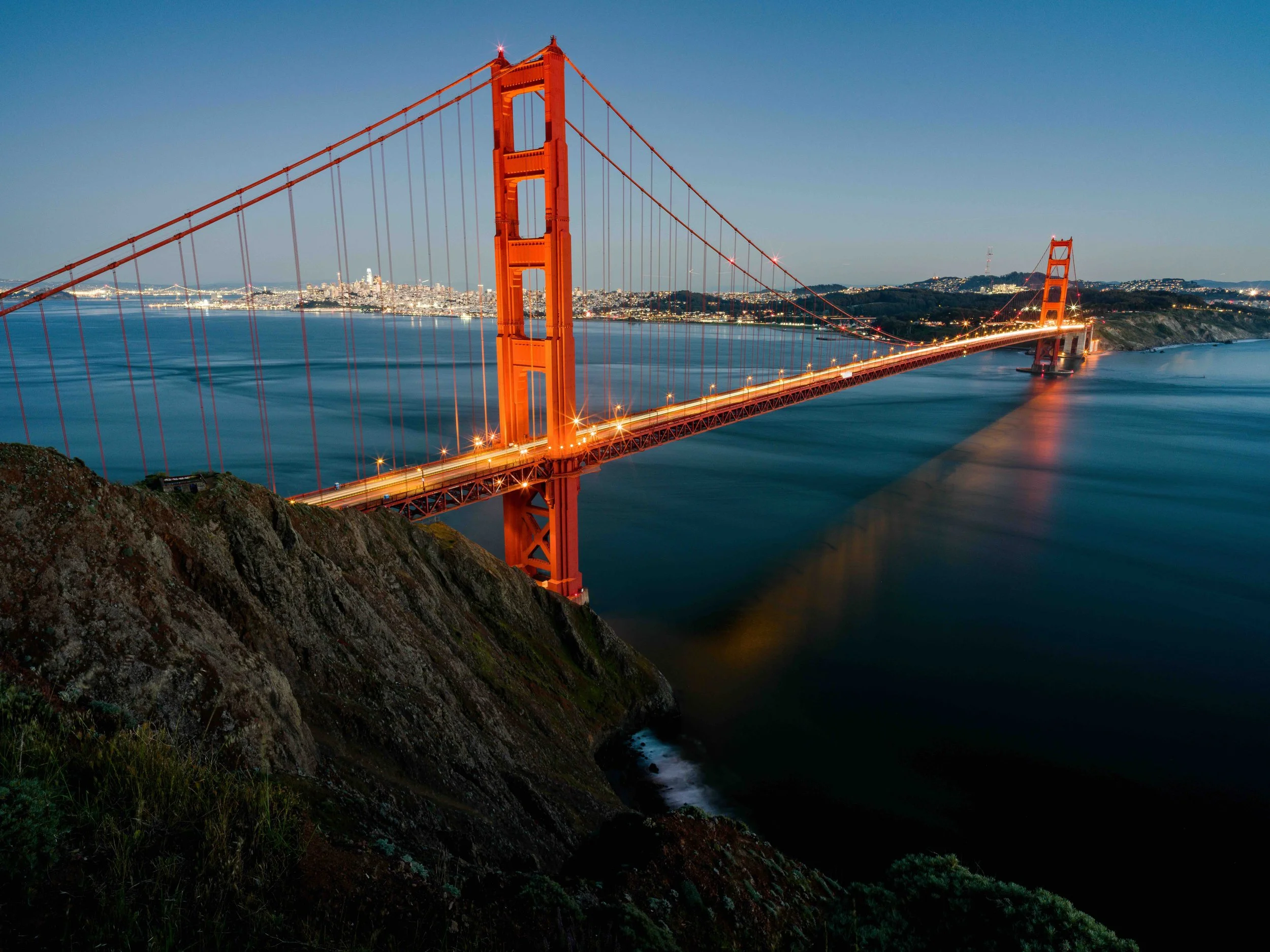
This image was taken from the Golden Gate viewpoint in San Francisco, late on a March evening. It was close to 10pm. The crowds that gather there during the day had thinned out. The air was cold and clear, carrying that particular stillness that settles over a city once the light has gone.
By that hour, the sky had shifted into deep, layered blues. The city behind the bridge had softened into a constellation of warm light. And the bridge itself on its unmistakable orange color had begun to glow against the dark.
That contrast is what makes this moment so compelling. The cool tones of twilight sitting against the warmth of the bridge. Calm and electric at the same time. Two entirely different moods sharing the same frame.
The Bridge That Wasn't Supposed to Exist
When construction on the Golden Gate Bridge began in 1933, many engineers considered it impossible. The strait it needed to span was subject to powerful ocean currents, thick fog, and winds that could gust to over 60 miles per hour. The depth of the water beneath made the foundations extraordinarily difficult to lay.
It took four years, the work of thousands of hands, and an extraordinary degree of collective belief to complete it. When the bridge opened in May 1937, it was the longest suspension bridge in the world.
The colour — that distinctive warm orange known officially as International Orange — was never the original plan. It was the primer coat applied to the steel during construction. An architect named Irving Morrow argued it should stay. He was right. Against the blues and greys of the San Francisco Bay, there is nothing else quite like it.
Standing beneath it at night, knowing all of that, you feel the weight of the thing differently.
Letting the Scene Breathe
One of the things I find most rewarding about shooting in low light is the way a long exposure changes your relationship with a scene. The water beneath the bridge, which at that hour carries a constant churn of movement, becomes something else entirely. It gets smooth, reflective, almost meditative. The city lights resolve into something sharp and deliberate.
Nothing feels rushed in this image. Everything is allowed to settle.
That was the intention. Not to manufacture drama, but to let the scene reveal the drama that was already there.
Why This Image Resonates
There is a reason the Golden Gate Bridge has been photographed more times than almost any other structure on earth. It rewards the patient observer. The light changes constantly. The fog rolls in and out. The hour matters. What makes an image stand out is not just the subject itself, but the specific moment captured within it.
Golden Gate Bridge fine art photography tends to be dramatic by default. The location almost insists on it. What I was looking for here was something different, a version of this icon that felt considered rather than spectacular. A moment of genuine stillness in one of the world's most visited places.
Gateway to Frisco is available as a fine art print on paper, metal, and acrylic. The deep blues and warm amber of the image translate particularly well onto metal, where the tones carry a depth and luminosity that feels true to the original scene. If this bridge means something to you or if you simply want a piece of California's most iconic landscape on your wall, this image was made for that space.