
An Afternoon at Bathsheba
Barbados is a place I keep coming back to for many different reasons.
The island has a quality that stays with you after you leave. Something in the light, or the warmth of the people, or the way an evening there tends to feel unhurried in a way that is harder and harder to find elsewhere. Over the years and several visits, I have made my way to different corners of it, each time finding something new to look at.
Bathsheba is one of those corners.
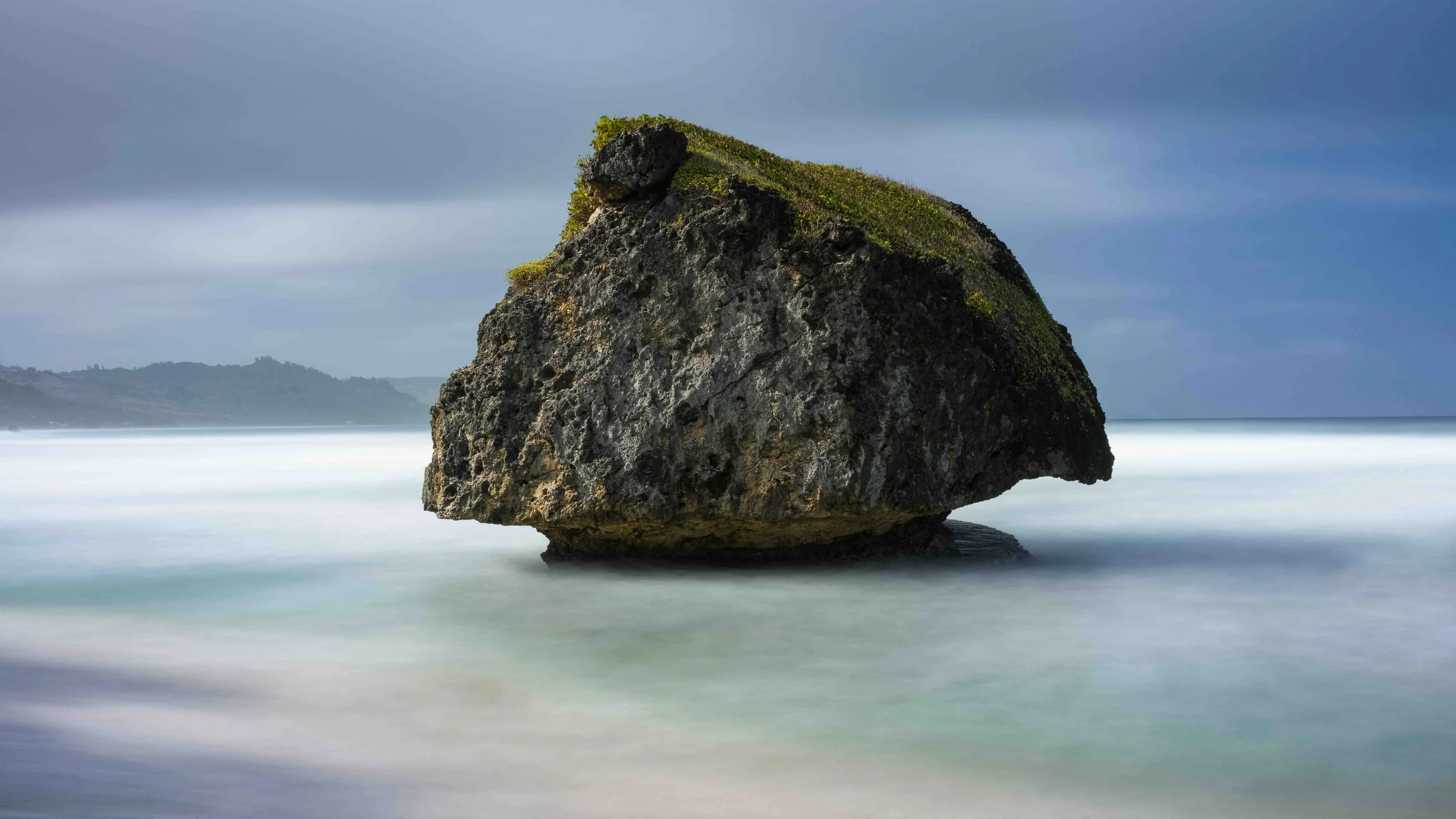
The Rock
The formation you see in this image has been standing in these waters for somewhere between one and two million years.
It is ancient coral limestone, shaped gradually by the Atlantic into this particular form. Rough textured, flat topped, a small growth of green along its crown. It sits in the water with the quiet authority of something that has been there long enough not to need to announce itself.
And yet, talking to locals in the area, one detail comes up consistently.
The base is eroding.
The same ocean that shaped this rock over millions of years is still working on it. Slowly. Imperceptibly from one visit to the next. But the process is ongoing, and it has no intention of stopping.
At some point, this formation will give way. It will disappear into the water the way everything that has ever stood here eventually does.
That knowledge changes how you look at the image. It stops being about what is visible and starts being about what will not always be there.
About Bathsheba
Bathsheba is a small coastal village in St. Joseph Parish, on the island's Atlantic coast. The rock formations here are ancient coral limestone, shaped over millions of years by some of the most powerful ocean swells in the Caribbean. The area is well known among surfers for the Soup Bowl, a natural break that draws serious waves year round.
It has a different character from the calmer parts of the island. More exposed. More elemental. The kind of place where the landscape is indifferent to your plans for the day, and is all the better for it.
The light on an overcast afternoon here has a softness to it that suits the subject. No harsh shadows. No dramatic colour. Just the rock, the sea, and a sky that keeps its distance.
What the Image Holds
I used a long exposure to smooth the water around the base of the rock. In reality, the sea was moving constantly, the way it always is along this stretch of coast. But extended over time, all of that motion becomes something soft and still. The water turns almost weightless.
And the rock stands in the middle of it. Heavy. Ancient. Unmoved, for now.
That contrast is where the image lives. The thing that appears fixed. And the force that is, patiently and without hurry, winning.
There is a particular quiet tension in a scene like this. You look at the rock and feel permanence. You learn a little more about it, and you realize nothing here is truly fixed. Time moves through everything at its own pace. Some things just take longer.
Why This Image Works
Most coastal photography tries to catch the sea at its most dramatic. The crashing wave, the spray, the moment of impact.
This image goes in the opposite direction. The sea here is almost silent. Still. And because of that, the rock becomes everything. You notice the texture of it. The weight of it. The small details along its surface that you would never see if the water were churning around it.
Restraint, in the right circumstances, reveals more than drama.
Sentinel of Bathsheba is available as a fine art print. The structure of the rock, the softness of the surrounding water, and the quiet overcast sky come together in a way that holds attention without demanding it. It is a piece that rewards a second look. And a third.